
The Body Doesn't Bluff
Training in an age of shortcuts


Like probably everyone reading this, I was raised under the traditional trajectory that you go to school, go to uni, get a job, find a partner, buy a house, have kids, work that job until retirement, die. Play safe bets that require patience but are dependable. Low-risk profiles.
A provocative article I read recently argues that bargain is dead. The author calls it “long degeneracy,” and the thesis is that an entire generation has turned to gambling (crypto, sports betting, prediction markets) not because they’re thrill-seekers or are prone to addictive tendencies, but because the traditional pathways are functionally broken.
When I read it I thought the numbers were brutal. Boomers hold 50% of national wealth while being 20% of the population. Millennials hold 10% despite being the same demographic slice. Housing costs doubled while wages grew 8%. The old bargain of show up, work hard for 30 years, get rewarded - it doesn’t exist anymore.
The author poses a strong argument that our basic needs (circa Maslow’s hierarchy) are mostly met through cheap-enough food and shelter, we all now have bandwidth for the higher-order stuff: meaning, purpose, belonging. However, the problem is that the traditional paths to those things, like homeownership, career progression, financial security, are blocked. Hence the gambling.
Prediction markets went from essentially nothing to $40 billion in annual volume. Sports betting jumped from $248 million in 2017 to $13.7 billion in 2024. Gen Z and Millennials account for 76% of betting activity.
The essay’s argument is that this makes sense. When the system stops rewarding patience, people stop being patient. When your options are “definitely stuck” versus “probably stuck but with a small chance of escape,” the second option wins every time. The casino is the only place many people feel any agency at all.
I say this is a strong argument because I recognise this in myself. I’ve taken three big risks before I’m 32. Quit a scholarship in America for the chance at a different path. Quit my job in London to retrain in a different field. Emigrated to Australia. Each time trying to pivot to find something better. My story isn’t uncommon. There’s a greater risk appetite these days, and I think it’s because there’s less hope in the traditional route. More opportunity-chasing. More looking for an escape to the promised land.
Now you don’t want to listen to me rant about society, that’s Shane’s domain. I’m here because I believe it’s important we pay attention to our biases. Because we do tend to take our attitudes towards one idea, and carry them into the next. And because we’re all here to talk about health, performance, and sustainability, I’m here to remind you: the body is still in the old days. Safe and slow and traditional is still the approach that works for it.
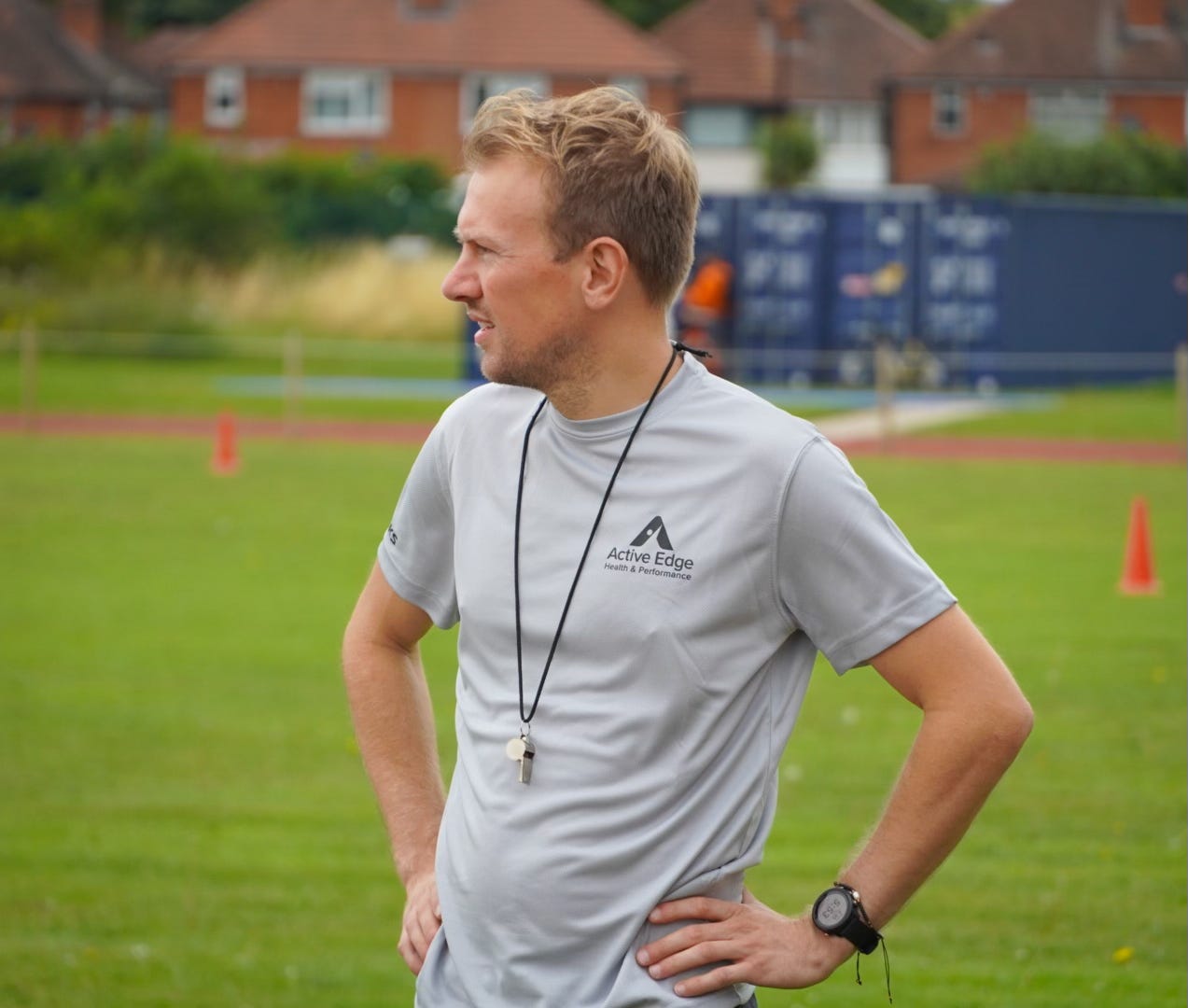
A reminder how the body works
You apply a stress, a run, a lift, a session that asks slightly more than you’re comfortable with. The body registers that signal and, if you give it the chance, it rebuilds a little stronger than before. Not dramatically. Just enough to handle what you threw at it, plus a small margin for next time.
As Steve Magness formulated so simply: Stress + Rest = Growth
The body’s processes have rules that only evolution can update. You can’t skip the stress, because the body needs the signal. You can’t skip the recovery, because that’s when the actual building happens. You can’t rush the timeline, because tissue adaptation has its own clock and it doesn’t care about yours. And you can’t borrow against future gains. There’s no leverage here or selling your soul. The body keeps honest accounts.
The body might be the only domain left where the old bargain still holds: show up, do the work, trust the process, get rewarded.
This is why patience isn’t just a virtue in training but the mechanism. The whole system runs on it. As I wrote in “Stay Calm and Do Nothing”, we’re susceptible to believing we must intervene to get back on track. But the principles that built strength and endurance 10,000 years ago still work today. Without patience, you don’t get adaptation. You get injury, burnout, or stagnation disguised as effort.
Neglecting patience is easily done though. I notice it in myself sometimes when training gets hard or progress stalls. A part of me wants to bargain and find a shortcut out of the hard bit that just takes time. Sometimes for me it can look like overconfidence: I can handle more than I think. I’ll push through. Maybe it’s willful ignorance: This niggle probably isn’t anything. I’ll just run through it. Maybe it’s magical thinking: If I just want it enough, the adaptation will come faster.
These are all forms of the same thing - trying to negotiate with a system that doesn’t negotiate. My cardiovascular system is not going to ‘come back quicker’ just because it used to be good, forgetting the four months of no running that’s just happened. I’m going to have to be patient, and I don’t have an algorithm for that (It wouldn’t be free if I did!)
In most domains now, we’re being conditioned to distrust patience. Your job might be automated by AI. Your savings won’t buy a house anytime soon. Social media shows everyone outpacing you. And so it seems we’re willing to accept volatility in the crypto market, the dating world, or with your career. We’ve learned to gamble where gambling feels like the only option.
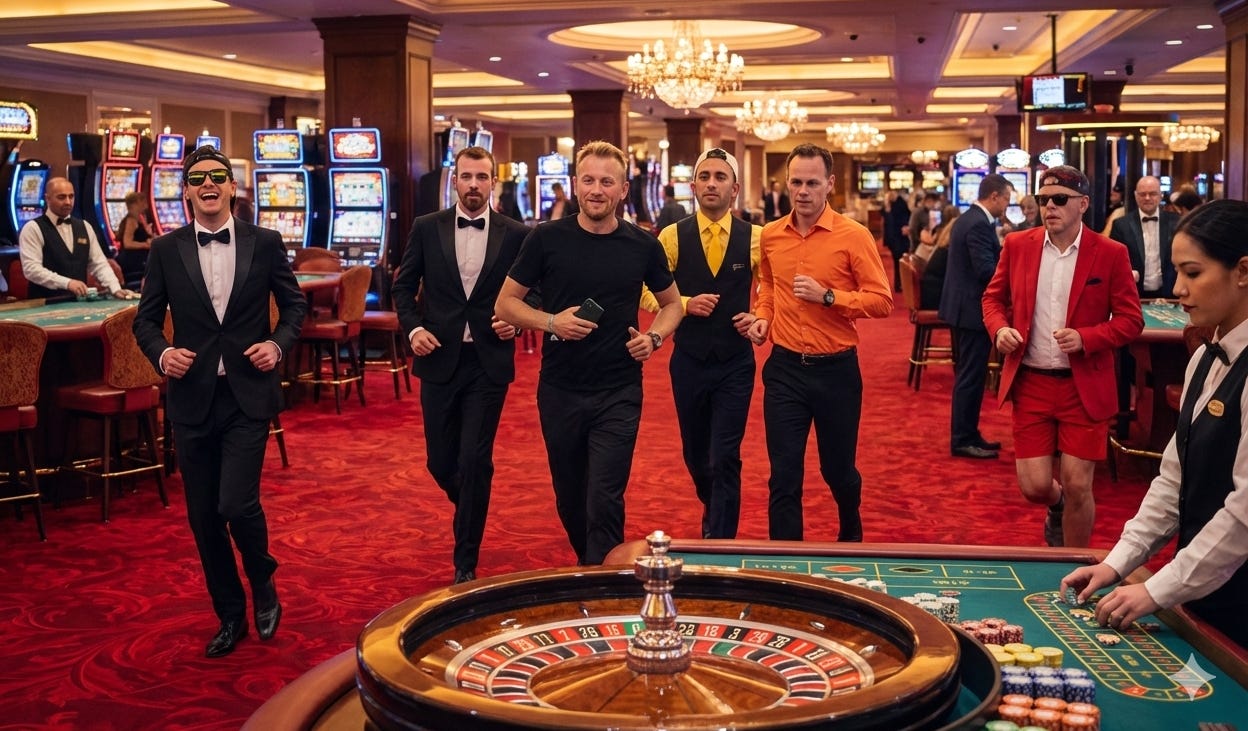
But your body doesn’t care about any of this. It won’t trade consistency for volatility and expect to come out ahead.
It cares about: Did you sleep? Did you eat enough protein? Did you progressively overload? Did you recover?
If you show up, if you do the work, if you’re patient, and if you resist the comfortable bargains and the overconfident stories, it will reward you. It will reward you with something more reliable: strength, health, capacity, resilience.
I don’t have solutions to financial desperation, can’t fix housing costs, AI displacement or the collapse of the 30-year employment bargain. But maybe I don’t need to. Maybe the body is the one place you can still trust the process. Maybe, for those of us who chose the broad path and are still looking for “the one,” this is where patience actually lives.
The body doesn’t take bets. It takes work. And in 2026, that might be the most radical position available.
Place your bets,
– Ron.
If you found this of value, then we value your support - Buy us a coffee: https://ko-fi.com/activeedge
Want more?
Here’s a good place to start:


The comparison between society's broken bargains and the body's unchanging rules is spot-on. What hits is that when traditional patience stops being rewarded elsewhere, we start looking for shortcuts in places where they dont work. I've noticed this myself when training gets frustrating - suddenly wanting extra sessions or pushing through niggles instead of trusting the process. The body's one of the last places that keeps honest accounts, and thats both reassuring and humbling.