
Training Load and Capacity: Why We Get Injured
It can be loads better



Overuse injuries and why they don’t technically exist
Time and time again in the clinic I have individuals who have been told they have overuse injuries that cannot be avoided. Myth-busting time! There is no such thing as an overuse injury, simply an inability to tolerate the current load you are trying to place on your tissues.
MY aim is to educate you that rather than accepting this fate, we must simply build your tissue tolerance to accept this load. Our body is an adaptive system after all, capable of responding to stress and load. Essentially, the same exposure that creates our susceptibility to injury also creates our resiliency to it, and we just need to titrate the dosage.
Sounds simple when it’s put like that…
Load, and our Capacity to manage it…
If you’ve been a reader for while, I’m sure you’ll have seen Shane previously mentioning Load versus Capacity, but today we’re pulling it right back to the basics. What is load and capacity? Why is it relevant? Our capacity is the physical threshold our body holds, which limits the amount of stress our tissues can tolerate. Load is the amount of mechanical stress that we place on the body. That all sounds well, but we must understand what factors affect our capacity and load, and more importantly, why they are important in considering when looking towards our health and performance levels.
Our Capacity is comprised of many factors, from the amount of sleep we are getting and how balanced our diet is, to lifestyle factors such as stress, our athletic identity and our previous experiences. Our Load, however, is linked more so to our training; such as the volume and intensity of our training, aswell as our form, equipment used and training surfaces.
It’s great to be aware of our capacity and load levels, as this allows us to identify shifts in the balance between the two. I often view these factors on a weighing scale, to help visualise this balance. Here’s a brief example.
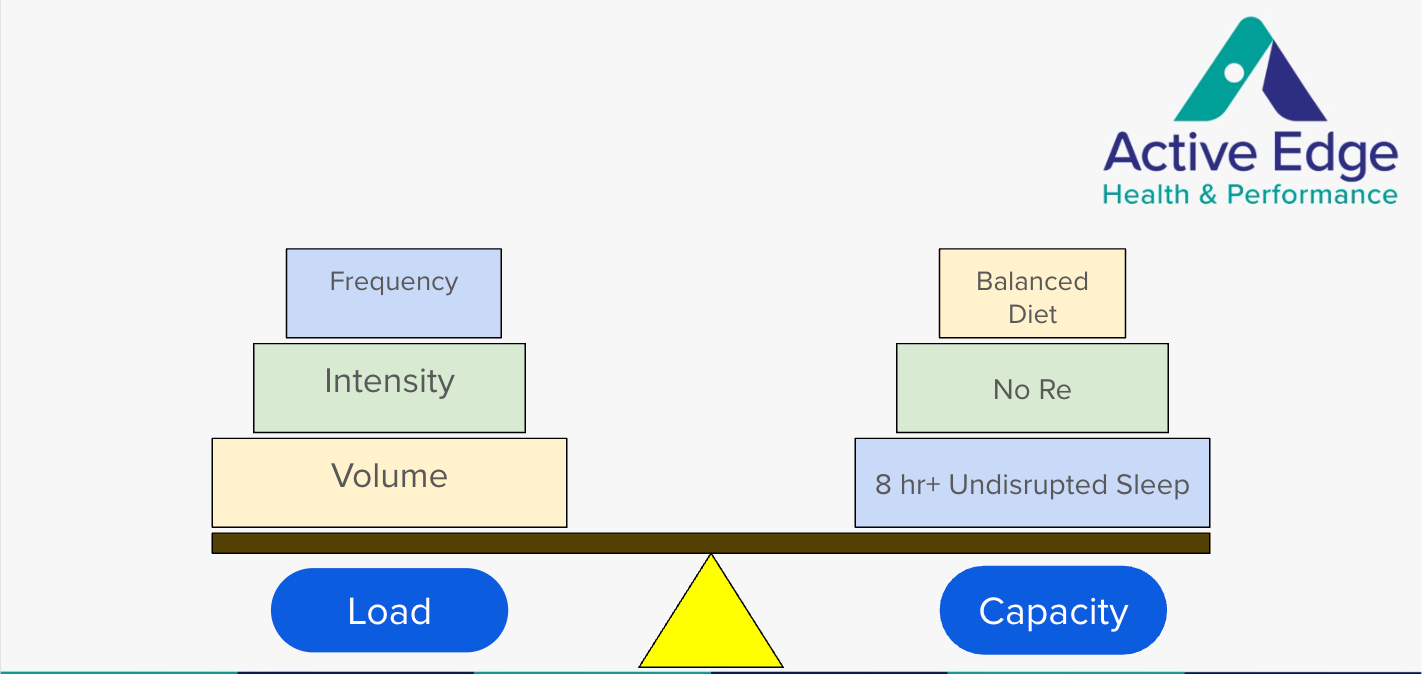
Now.. why is this so important? By understanding when we are balanced, we can also identify when we are not, and thus, what this may lead to.
Let’s put this into practise!
Let’s say we have an individual who runs three times a week, trains at the gym four times a week, and works a full-time job. This is (a very basic guideline) their load. This individual may also sleep eight hours every night, have a balanced diet, and have no recent injuries. This is a basic understanding of a relatively balanced capacity to load.
This individual then buys a new house and begins to move in. They are still able to fit in their usual training load and work, however, the stress of moving house has meant that they aren't sleeping well. They have also been opting for a takeaway 3x a week to make this easier on them. While these changes are small, they can affect our body’s capacity and physical thresholds. By taking away these factors that have allowed for a balance between our capacity and load, we experience a shift.
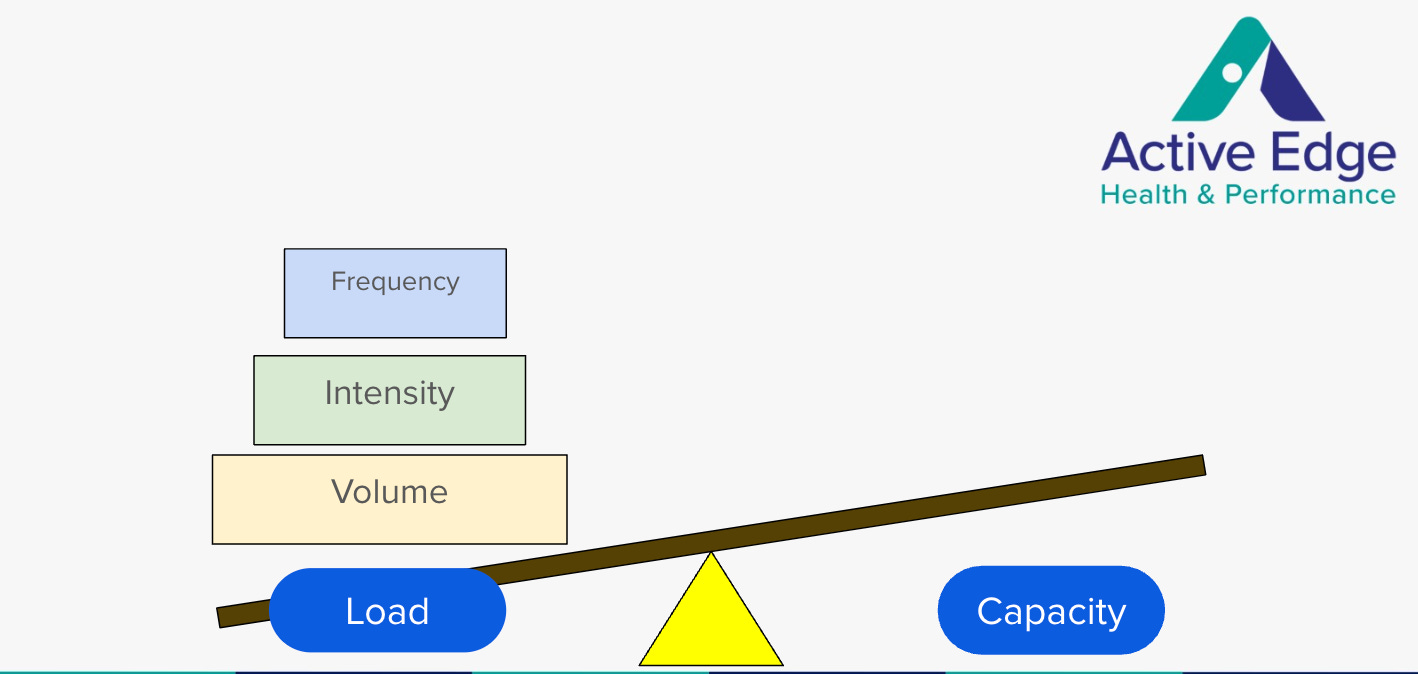
As a result of this, this individual has been finding his training much harder than usual, with fatigue and muscle aches throughout the week. Although these aches can go ignored, if left unresolved, may slowly build into larger issues .. often known as ‘Overuse’ Injuries AKA too much load for our current capacity levels.
Hopefully, this now highlights the importance of understanding why we must look to our load and capacity when experiencing changes in our response to exercise or activity. Equally, we can use this model to pre-empt when we may need to adapt our load, when our capacity has become reduced, to prevent pain or injury.
Let's aim to identify these areas and strengthen them, rather than accept them!
Yasmin - Sport Rehabilitation Therapist
If this newsletter spoke to you, consider booking in for a consultation with Yasmin to talk about your specific capacity to load. In the meantime, you can find more performance insights from our previous editions - all here on Substack.
If you found this of value, then we value your support - Buy us a coffee: https://ko-fi.com/activeedge
Website, Videos and more: https://linktr.ee/theactiveedge
 | A guest post by
|