
When Did I Become Obsessed?
Is it my ego or my goals?


Disclaimer: The title is not in first person. Sorry if you were hoping for a personal exposé. Truthfully, I seem to lack obsessive traits in any magnitude that might be considered unhealthy.
Instead I’m going to talk about us — the ambitious amateurs. The ones balancing on a seesaw between passion and obsession.
The Elite Personality (And Our Fascination With It)
We’ve become a bit obsessed with acting elite.
It’s everywhere. Podcasts, documentaries, social media reels. Elite athletes are more visible than they’ve ever been, and we have the ability now to be linked up to them constantly. Their habits, routines, “hacks”...
It’s hard not to get carried away and absorb it. We optimise and maximise things (often the things that don’t quite matter as much) and treat our performances as if they define us. I’m not saying this is inherently a bad thing. I want people to challenge themselves and stay familiar with discomfort…just sometimes we need a reality check. For us, we keep being told we can learn from elite practice but instead we rush to imitate it, forgetting the elite contexts, and tipping us from committed to consumed.
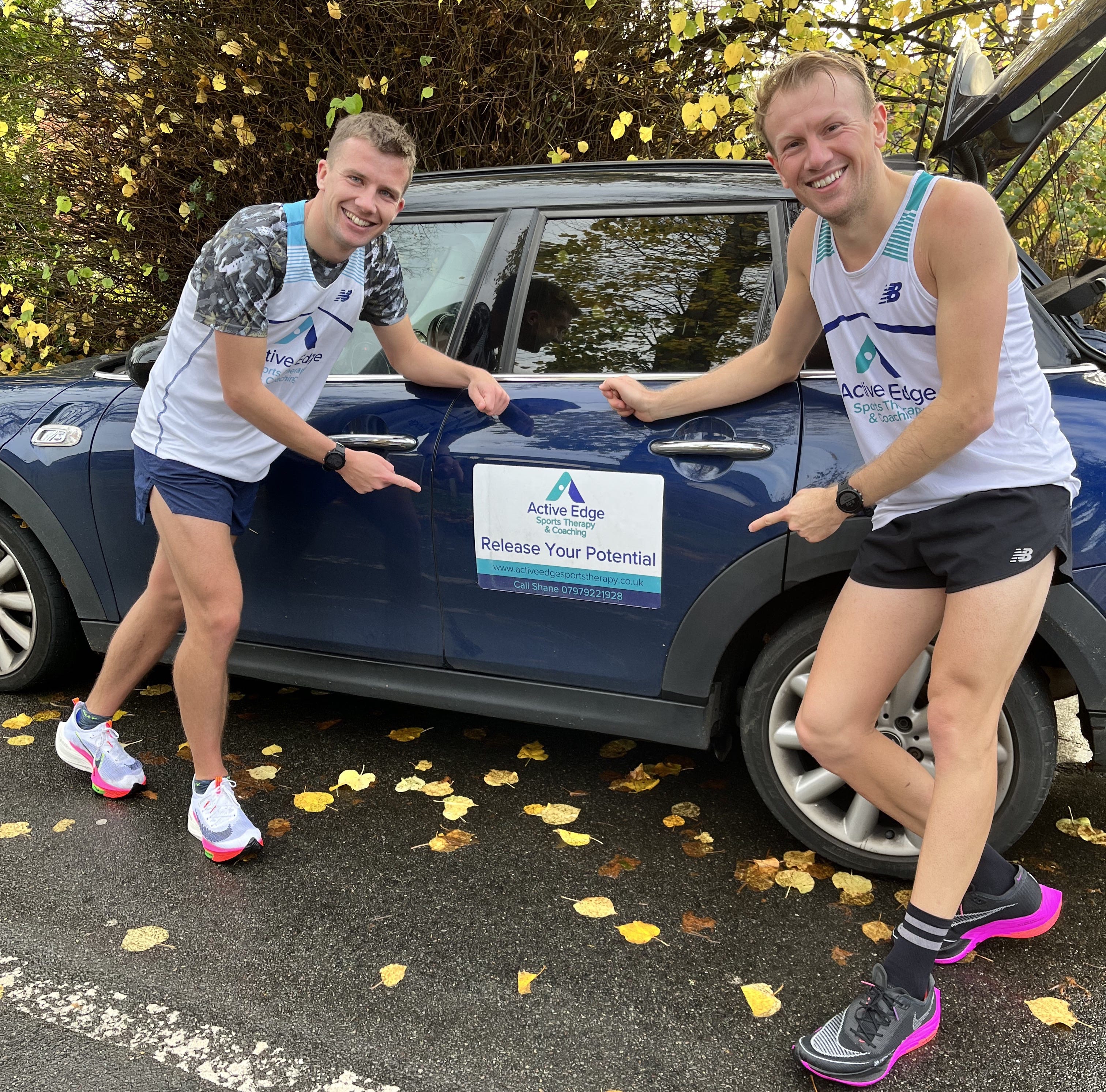
So take obsession for instance. In elite sport, the line between commitment and obsession is often as thin as Shane’s hair. Dedication to training is essential to achieve success at that level, but for some, that dedication can morph into something riskier. Some research suggests obsessive traits may be present in up to 42% of elite athletes [1].
In elite environments, obsessive tendencies can be reinforced or often socially rewarded. Awkwardly, they are correlated (not causal) to high achievement. They’re rooted in high conscientiousness (seen as a positive trait) and high neuroticism (often less celebrated, but common). They manifest in elites as a level of intense focus, meticulous planning, and relentless drive to improve that most of us simply don’t have to that degree. They also exhibit higher levels of anxiety than the general population [2], but here’s the difference — they’re often able to function and succeed despite (or even because of) that anxiety.
In short: they tend to be able to cope with their obsession.
The Impact On Performance (For The Rest Of Us)
For the rest of us (maybe neurotic and conscientious too), things can get...blurred.
When passion and commitment edges towards obsession, we can become more withdrawn, more rigid, more polarised in our thinking. We start to feel emotions around exercise and performances that are harder to ignore, and our relationship with training becomes more about compulsion than joy. We start to strive rather than thrive. We need it rather than we choose it. Training stops feeling like a privilege and starts becoming a requirement - and not because we want to, but because we low-key fear what it means if we don’t.
There’s now a cultural emphasis on achieving a certain physique or hitting specific metrics, often shaped by global fitness trends and social media. This pressure can amplify compulsive exercise behaviours, especially in those of us wired to chase goals.
You might think, “But isn’t this just goal-oriented behaviour?”. Fair question - and researchers thought about that too. A recent study in the BMJ deliberately adopted a risk-based approach to differentiate early warning signs of problematic patterns without pathologising athletic training. As they put it:
“Our aim is not to pathologise structured athletic training, but to recognise when it may stem from psychological distress.” [1]
The difference? One approach builds health; the other tries to outrun something else.
Ego Check
Part of our obsession with elites is that we think we’re closer than we are to replicating them.
Sure, It’s typically a male-dominated attitude, like the infamous survey stat that 1 in 8 men think they could score a point off Serena Williams. But it’s something I was talking with Shane about recently, and then I saw Substacker Manuel Sola Arjona write a note about remembering the “abyss that separates (us from them)” in reference to Tour de France riders.
And yet, we try. We obsess over the best training plan, the latest hack, the cutting-edge wearable, convinced that maximising every detail is the key. We compare our ‘readiness scores’, or our ‘sleep reports’, or whatever else we can collect data on and obsess that these are the metrics that will make a difference.
But let me remind you:
You’re not elite — and that’s not a bad thing.
I don’t mean that in an undermining way, but there’s a reason most of us make up the majority. Your motivation, stress, training loads, and emotions are intertwined, time-dependent, and context-dependent. You don’t need to be ego-oriented or compare your performance to others. What you are, is capable of personal improvement and mastery, with an emphasis on the personal. You are an individual. You are specific. You are contextual. (There, I’ve said it again, the c-word that we love to say at Active Edge).
And don’t just take my word for it. Time and time again, the people that actually work in this area — the coaches, sport scientists, and psychologists — see these things differently. They know metrics are important, but not everything. In fact, the best practices are individualised and context-specific [3]. In elite endurance coaching, close athlete interaction remains the most valuable form of monitoring. They rely more heavily on conversation and feedback than they do on tech.
There’s even emerging research that individualised training, using both objective and subjective monitoring, consistently outperforms rigid programs. So remember we are non-elite, and we don’t always have the time or freedom or money for regular coaching, but the key message still stands: it’s about you, not you vs. others. And if you do have the time and the freedom and the money - get yourself a coach who realises this and wants to help you, wants to keep you engaged in it because you choose to, not anybody else.
How To Coach Healthy Obsession
That leaves us with whether we can have healthy obsession? It exists — but it’s subtle.
Healthy obsession is enhancing, not draining. It’s sustainable, passionate, but grounded.
Whether you get 1-1 coaching, use an AI-generated plan, or follow a free 12-week guide from the internet, remember what you’re buying — and what you’re not.
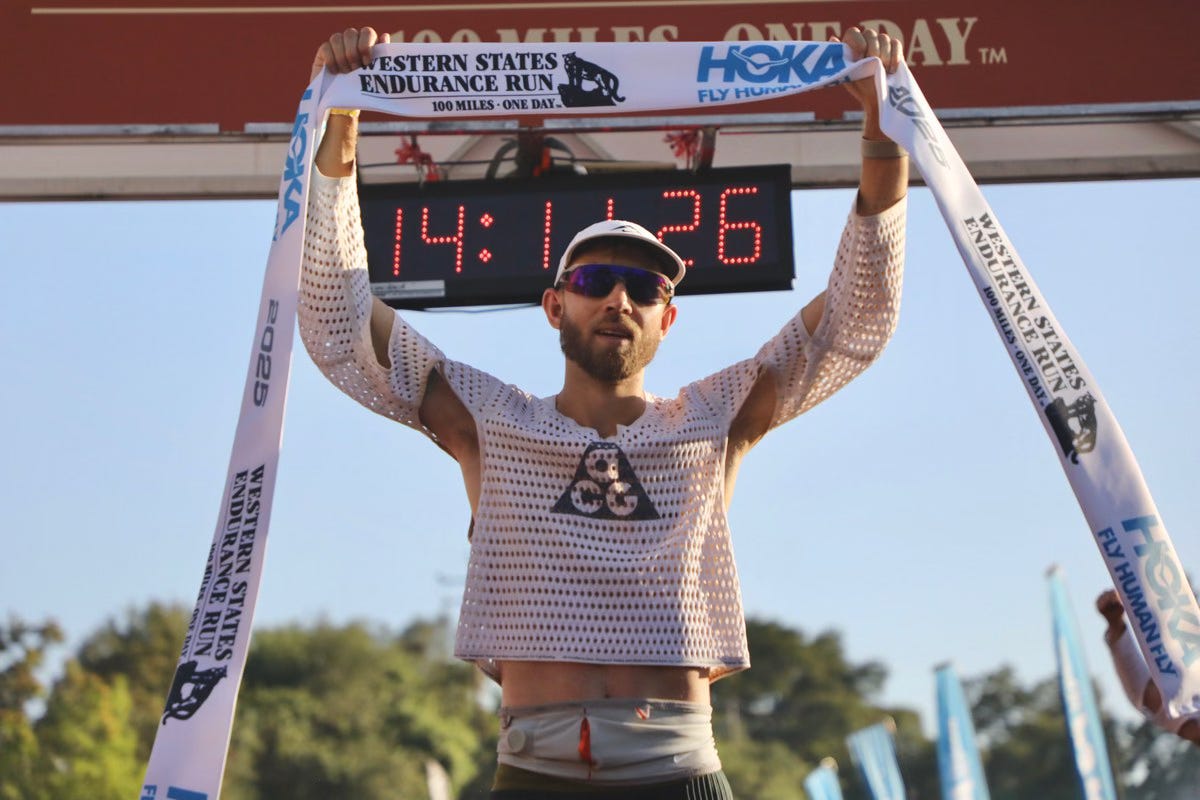
So go and get the new watch that tracks 100 metrics. Buy the massive sunglasses. Wear Caleb Olson’s ultra-top if it makes you feel good (pic below). But do it for the enjoyment — not because you think it’s essential to improvement. Keep it fun. Keep it yours.
Monitor yourself until your heart’s content but treat it like you’re playing Catchphrase with Roy Walker. We get snapshots, make guesses, and try to piece together the bigger picture. It’s not always accurate, and some of us are completely terrible at it — but it works when you treat it as part of a game, not a verdict on your worth.
You’re playing because you enjoy it. And that’s the point.
Go well,
Ronny
If you have been reading along consistently, thank you. If you enjoy reading this with a morning coffee, why not buy us one too!? - Buy us a coffee: https://ko-fi.com/activeedge
Further Reading and References


[1] - Tariq, A., & Saad, A. (2025). When fitness becomes an obsession: a cross-sectional study investigating the risk of exercise addiction among athletes. BMJ Open Sport & Exercise Medicine, 11(3). doi: 10.1136/bmjsem-2025-002630
[2] - Hanin, Y. L. (2007). Emotions and athletic performance: Individual zones of optimal functioning model.
[3] - Timmerman, W. P., Abbiss, C. R., Lawler, N. G., Stanley, M., & Raynor, A. J. (2024). Athlete monitoring perspectives of sports coaches and support staff: A scoping review. International journal of sports science & coaching, 19(4), 1813-1832. doi:10.1177/17479541241247131